Stretching is a simple yet powerful way to improve your flexibility, reduce muscle tension, and promote overall wellness. Whether you’re looking to add a gentle warm-up to your daily routine or want to ease stiffness after a day at the desk, stretching at home is convenient and accessible for everyone. This beginner’s guide will walk you through the basics of stretching, the benefits, and easy-to-follow routines you can start today.
Why Stretching Matters
Stretching helps lengthen your muscles and tendons, which can enhance your range of motion and prevent injury. It can also:
– Increase blood flow to muscles
– Improve posture
– Reduce muscle soreness
– Relieve stress and tension
– Enhance athletic performance
Incorporating stretching into your daily routine can contribute to your overall physical and mental health.
Key Principles for Stretching at Home
Before you start stretching, keep these important guidelines in mind:
- **Warm Up First:** Stretching cold muscles can cause injury. Light activity like walking in place or gentle jogging for 3–5 minutes helps prepare your body.
- **Stretch Slowly and Gently:** Avoid bouncing or forcing a stretch. Move into the position gradually and hold steady.
- **Hold Each Stretch:** Aim for 15–30 seconds per stretch. Repeat 2–4 times for best results.
- **Breathe Deeply:** Maintain steady breathing to help your muscles relax.
- **Listen to Your Body:** Stretch to the point of mild tension, not pain. If you feel discomfort, ease off.
Types of Stretching
There are several styles of stretching, but two are most common for beginners:
Static Stretching
This involves holding a stretch in a fixed position. It’s ideal after workouts or as a gentle daily practice.
Dynamic Stretching
This uses controlled, active movements to prepare muscles for activity. It’s great as a warm-up before exercise.
For beginners, static stretching is often the most accessible and safe option to start with.
Essential Stretches for Beginners
Here are six basic stretching exercises you can do at home to target major muscle groups:
1. Neck Stretch
– Sit or stand with your back straight.
– Gently tilt your head to the right, bringing your ear toward your shoulder.
– Hold for 20 seconds, feeling a stretch along the left side of your neck.
– Repeat on the other side.
2. Shoulder Stretch
– Bring your right arm across your chest.
– Use your left hand to press your right arm closer to your chest.
– Hold for 20–30 seconds, then switch arms.
3. Chest Opener
– Clasp your hands behind your back.
– Straighten your arms and gently lift your hands upward.
– Open your chest and hold the stretch for 20 seconds.
4. Seated Forward Bend
– Sit on the floor with legs extended straight.
– Reach forward toward your toes, keeping your back as straight as possible.
– Hold for 30 seconds, feeling a stretch in your hamstrings and lower back.
5. Cat-Cow Stretch (for back flexibility)
– Start on your hands and knees.
– Inhale as you arch your back (cow pose), lifting your head and tailbone.
– Exhale as you round your back (cat pose), tucking your chin and pelvis.
– Repeat slowly 5–8 times.
6. Standing Quadriceps Stretch
– Stand tall and hold onto a chair for balance if needed.
– Grab your right ankle with your right hand and gently pull your heel toward your buttocks.
– Keep knees close together and hold for 20 seconds.
– Switch legs.
Creating a Simple Stretching Routine
To build a routine, start with 10–15 minutes a day. You can stretch in the morning to wake up your body, during breaks to relieve tension, or in the evening to relax.
Here’s a sample beginner routine:
- Warm up with light marching in place for 3 minutes.
- Perform each of the six stretches listed above, holding each for 20–30 seconds.
- Repeat any tight areas once more.
- Finish with deep breathing to relax.
Consistency is key. Aim for stretching at least 3–4 times a week and gradually increase as you feel more comfortable.
Tips for Success
– Wear comfortable clothing that allows movement.
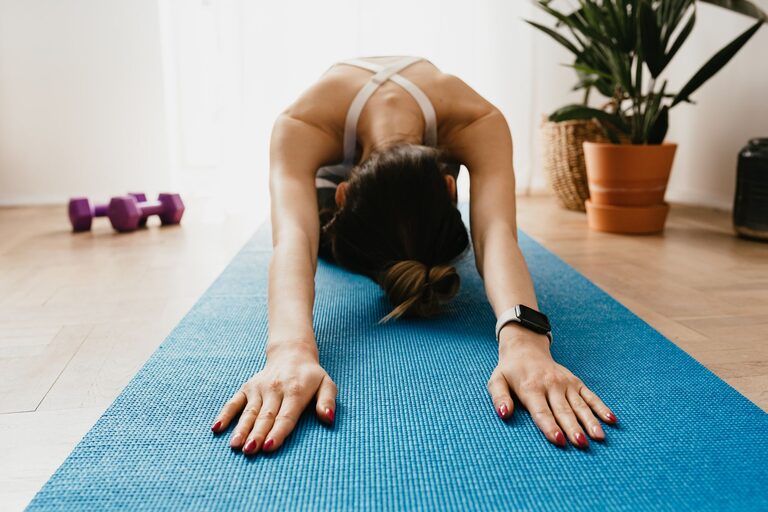
– Use a yoga mat or soft surface for floor stretches.
– Stay hydrated.
– Avoid stretching if you have an injury or consult a professional if unsure.
– Track your progress to stay motivated.
Final Thoughts
Stretching at home is a simple way to support your body’s health and flexibility without needing special equipment or a gym membership. With just a few minutes each day, you can enjoy increased comfort, reduced stiffness, and improved range of motion. Remember to be patient and gentle with your body as you develop your practice.
Start today and feel the difference stretching can make!
About the Author